

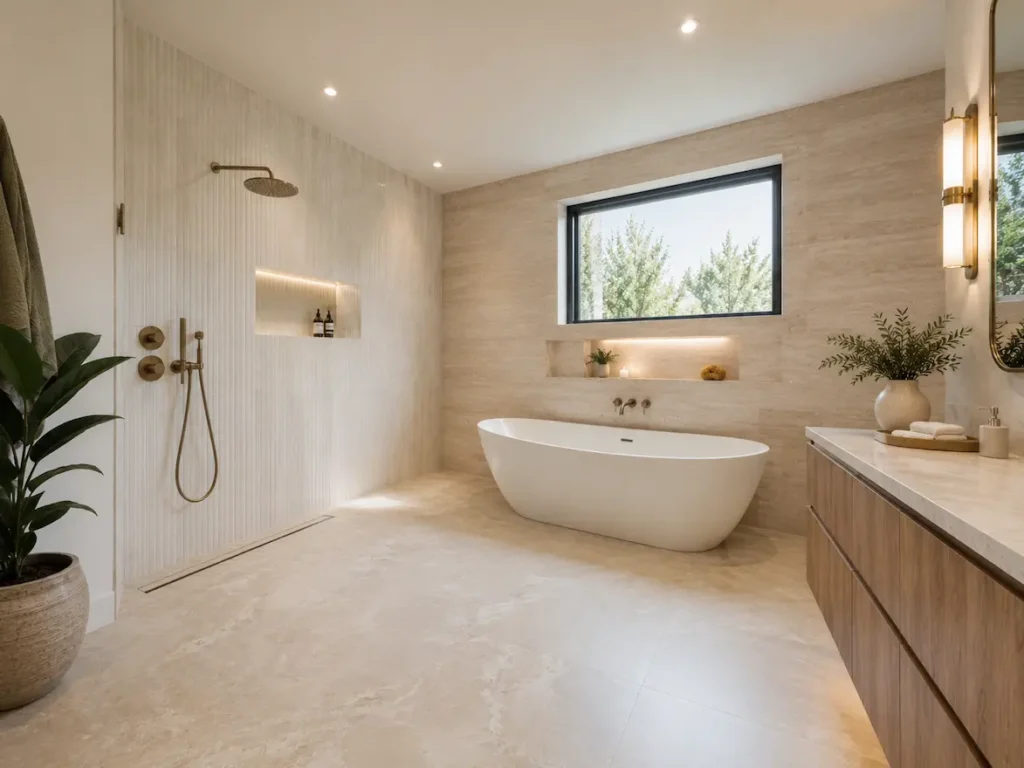
A wet room bathroom can look simple from the outside. The shower feels open. The floor runs with fewer visual breaks. The room may feel easier to move through, easier to clean, and more modern than a traditional tub or enclosed shower layout. For homeowners planning a remodel, that simplicity is often the appeal.
The part that matters most is what happens before the tile goes in. A wet room bathroom needs the right slope, drainage, waterproofing, ventilation, fixture placement, and layout planning. If those pieces are handled casually, the room can create water problems instead of solving them.
At Lone Star Remodeling Dallas, we think a wet room should be treated as a planning decision first and a design decision second. The look can be beautiful, but the system behind it is what makes the bathroom comfortable, durable, and practical for real daily use.
Why a Wet Room Bathroom Needs More Planning Than It Seems
A wet room bathroom removes some of the barriers that usually separate the shower from the rest of the space. That can make the room feel larger and cleaner, but it also means water has more freedom to move.
The floor needs to direct water toward the drain. The waterproofing has to protect the right areas. The showerhead position, toilet location, vanity placement, and door swing all need to be considered together. A layout that looks open on paper can feel awkward if towels, storage, and dry standing areas are not planned early.
This is why homeowners should not think of a wet room as simply a shower without a curb. It is a different kind of bathroom system. The design has to manage water, comfort, safety, and everyday routines at the same time.
A wet room bathroom works best when those practical details lead the design instead of being fixed later.
When a Wet Bathroom Layout Makes Sense
A wet bathroom layout can make sense in several real-home situations. It may help a small bathroom feel less chopped up. It may support aging-in-place goals by reducing barriers. It may make a guest bath feel cleaner and more flexible. It may also work well in a primary bathroom where the homeowner wants an open shower experience.
The strongest reason to consider this layout is not trend. It is fit. The room should have enough space for water control, safe movement, and a dry zone near the vanity or entry. In very tight bathrooms, the idea can still work, but the details matter more.
A wet room bathroom may not be the right answer if the room lacks drainage flexibility, has poor ventilation, or would force the toilet and vanity into splash-heavy areas. The goal is not to force the look into every bathroom. The goal is to decide whether the room can support the design without making daily use more frustrating.
Waterproofing Is the Real Foundation
Bathroom waterproofing is the part homeowners rarely see, but it is the part that protects the remodel. In a wet room, waterproofing cannot be treated like a minor detail around the shower. The room needs a broader moisture strategy because water can reach more surfaces.
The floor, shower walls, corners, seams, drain connection, and sometimes nearby wall areas all need careful attention. Tile and grout are not the waterproofing system by themselves. They are finish materials. The protection comes from the preparation and waterproof layers behind or beneath them.
A wet room bathroom should be planned with the expectation that water will spread farther than it would in a traditional shower. That does not mean the whole bathroom should feel soaked after every use. It means the remodel should be built with enough protection to handle real life, not only ideal use.
Good waterproofing is what makes the clean, open look possible.
Drainage and Slope Decide How the Room Feels
A wet room shower depends on drainage. If the slope is wrong, water may sit on the floor, move toward the vanity, or create slick areas where someone expects the room to stay dry.
The floor needs a controlled pitch toward the drain. That slope should feel natural underfoot, not awkward or uneven. The drain location matters too. A linear drain can work well in some designs because it allows a cleaner floor pitch. A center drain may work in other layouts, depending on structure and tile choices.
This is where planning and construction quality meet. The homeowner may see tile, glass, and fixtures. The daily experience depends on whether the floor quietly does its job.
A wet room bathroom should drain efficiently without making the room feel like a utility space. When the slope is planned well, the bathroom can feel open and practical at the same time.
Wet Room Shower Placement Matters
The wet room shower should not be placed only where it looks good in a rendering. It should be placed where water, movement, and comfort make sense.
Showerhead direction matters. A fixed showerhead may control water better than a poorly placed handheld. A rain shower can feel luxurious, but it still needs to be paired with the room’s drainage and splash plan. Glass panels can help contain water without closing the room completely.
The vanity should not sit where it will constantly catch overspray. The toilet should not feel like it is inside the shower zone unless the room is specifically designed to handle that wet bathroom experience. Towels need to stay reachable without being in the direct splash path.
A wet room bathroom should feel open, not careless. Placement choices determine whether the design feels polished or irritating after the first week.
Tile Choices Should Balance Grip, Cleaning, and Style
Tile is one of the biggest visual choices in this kind of remodel, but appearance should not be the only deciding factor. Floor tile needs enough traction for wet use. Wall tile should be easy to maintain. Grout lines, texture, tile size, and finish all affect cleaning and safety.
Large-format tile can make a room feel calmer, but it may be more difficult to slope around certain drains. Smaller tile can offer more grip and adapt well to slopes, but it introduces more grout lines. Textured tile can help with traction, but it may require more cleaning.
The best choice depends on the room, the drain, and how the homeowner wants to maintain the space. A wet room bathroom should not trade daily comfort for a tile that only works in photos.
A good tile plan supports the wet area, the dry area, and the mood of the remodel.
Storage Still Matters in an Open Bathroom
Open bathrooms often lose storage if the design focuses too much on the shower. That can create a room that looks clean at first but becomes crowded with bottles, towels, and daily items.
A wet room bathroom still needs practical storage. Recessed niches can keep shower products off the floor. Vanity drawers can reduce counter clutter. A tall cabinet or built-in shelf can help with towels. Hooks and towel bars need to be placed where they stay usable and dry enough.
Storage should be planned before walls are closed and tile is installed. Waiting until the end usually leads to add-ons that feel less integrated.
The best wet room designs feel simple because the clutter has somewhere to go. The room works because the daily routine was planned, not ignored.
Ventilation Protects the Remodel
Moisture control does not stop at the drain. A wet room creates more exposed wet surfaces than a standard shower enclosure, so ventilation matters.
A properly sized bath fan, smart placement, and good airflow help the bathroom dry between uses. Without that, the room may stay damp longer than expected. That can affect comfort, cleaning, and the life of nearby materials.
Homeowners sometimes focus heavily on tile and fixtures while treating ventilation as a basic checkbox. In this layout, that is risky. The room needs to dry well enough for daily use.
A wet room bathroom should feel fresh after use, not humid for hours. Ventilation is one of the quiet details that helps the design stay comfortable over time.
Accessibility Can Be a Strong Reason to Consider It
One of the best reasons to consider a wet room is accessibility. A curbless or low-barrier shower can make entry easier for many homeowners. It can also support long-term planning for aging parents, mobility changes, or a bathroom that needs to work for different users.
That does not mean every accessible bathroom has to look clinical. With the right tile, drain, grab bar planning, bench placement, and lighting, the space can feel modern and comfortable.
A wet room bathroom can support accessibility when the layout is planned correctly. The open floor, reduced barriers, and thoughtful fixture placement can make the room easier to use.
The important part is planning early. Accessibility features should be integrated into the design, not added awkwardly at the end.
Cost Depends on More Than the Look
The cost of a wet room depends on scope. Moving plumbing, changing the floor structure, adding waterproofing, installing specialty drains, adjusting walls, and upgrading tile can all affect the budget.
A simple finish update is very different from rebuilding the bathroom floor system for proper drainage. Homeowners should understand that the clean look often comes from more work behind the surface.
This does not mean the idea is automatically out of reach. It means the budget should match the technical work. A wet room bathroom may be worth the investment when it improves layout, access, cleaning, and long-term use. It may not be the right use of budget if the room needs too many structural changes for too little practical gain.
A better planning conversation helps separate a smart upgrade from an expensive idea that does not fit the space.
A Wet Room Bathroom Should Fit the Home, Not Just the Trend
Some design ideas look appealing online because they are photographed in large, highly controlled bathrooms. Real homes are different. They have narrower layouts, existing plumbing, family routines, shared spaces, kids, guests, towels, storage needs, and mornings that need to move smoothly.
A wet room bathroom should make the home easier to live in. It should not make towels harder to keep dry, floors harder to manage, or the daily routine more complicated. The design needs to respect the size of the room, the way water will move, and how the household actually uses the bathroom.
For some bathrooms, a full wet room is the right move. For others, a curbless shower with a glass panel may create the same open feeling without turning the entire bathroom into a wet zone. In some cases, a traditional shower layout may still be the more practical answer.
That is why the best next step is not choosing the wet room look first. It is reviewing the layout, drainage, waterproofing, ventilation, and fixture placement before committing to the idea. Lone Star Remodeling Dallas can help homeowners understand whether a wet room bathroom fits the space or whether another bathroom remodeling plan would work better.
The best remodel is not the one that follows the trend most closely. It is the one that works in the home every day.
Plan the Wet Room Before Choosing Finishes
A wet room should be planned before tile, fixtures, vanity style, or lighting decisions are finalized. The technical plan comes first: slope, waterproofing, drainage, ventilation, shower placement, and dry zones.
Once those decisions are clear, finish choices become easier. The tile can support the slope. The vanity can stay out of the splash path. The lighting can brighten the shower and the mirror. The storage can serve the routine.
Homeowners planning a bathroom remodel can review Lone Star Remodeling Dallas page to understand how layout, materials, and construction planning fit into a broader project. If you are considering a wet room bathroom and want to know whether the layout can support it, contact us before choosing finishes or committing to the design.
FAQ
What is a wet room bathroom?
A wet room bathroom is a bathroom where the shower area is integrated into the room with planned drainage, slope, and waterproofing.
Is a wet room good for small bathrooms?
It can be, but small bathrooms need careful planning so water control, storage, and dry zones still work.
Does a wet room bathroom need special waterproofing?
Yes. Wet rooms need a broader waterproofing strategy because more floor and wall areas may be exposed to moisture.
Is a wet room shower easier to clean?
It can be easier to clean because there are fewer barriers, but tile, grout, ventilation, and drainage still matter.
Can a wet room help with accessibility?
Yes. A low-barrier or curbless layout can make shower entry easier when the room is planned correctly.
Is a wet room more expensive than a regular shower?
It can be, especially if plumbing, floor slope, drainage, waterproofing, or structural changes are needed.