

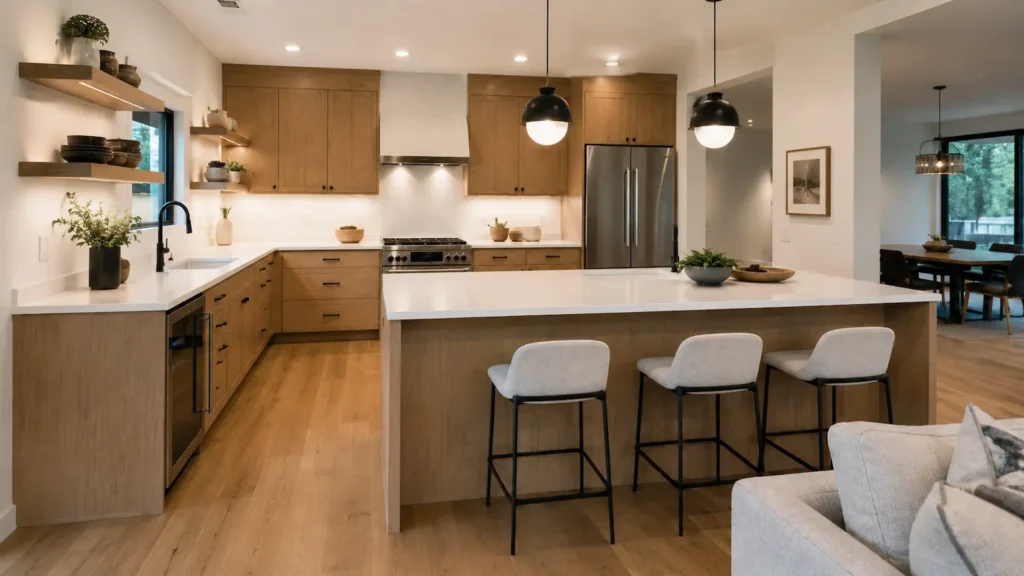
A kitchen peninsula can look like a simple design choice at first. One extra run of counter. A few more cabinets. Maybe seating for two or three people. Then the remodel conversation gets more specific, and homeowners begin to see how much that one feature can change the way the kitchen works.
A peninsula can shape traffic, storage, prep space, seating, and the connection between the kitchen and nearby living areas. It can make a small kitchen feel more useful or make an open layout feel more defined. It can also create problems if it blocks movement, crowds the room, or gets added because it looked good in a photo.
At Lone Star Remodeling Dallas, we look at a kitchen peninsula as part of the whole kitchen, not as a standalone feature. The right design should support the way the homeowner cooks, gathers, stores, serves, and moves through the space every day.
Start With the Problem the Peninsula Should Solve
Before choosing cabinet colors or counter material, the first question is simple: what should the peninsula fix?
Some homeowners need more prep space. Others need a place for kids to sit while meals are being made. Some want the kitchen to feel connected to the living room without becoming completely open. Others need storage that does not make the room feel crowded.
A kitchen peninsula works best when it answers a real need. If the kitchen already has good prep space but poor movement, adding more counter may not help. If the room lacks storage, the base cabinets below the peninsula may be more valuable than the seating above it. If the kitchen feels too exposed, the feature can create a soft boundary without building a wall.
Good planning starts with that kind of honesty. The peninsula should earn its space.
Layout Comes Before the Look
The layout decides whether the kitchen peninsula feels helpful or frustrating. A beautiful counter will not save a design that makes people squeeze through the same narrow walkway every morning.
The key question is movement. Can someone open the dishwasher while another person walks behind them? Can the refrigerator door open without blocking the main path? Can guests sit without cutting off the cook’s work zone? Can the kitchen still handle two people moving at the same time?
A peninsula usually works best when it improves the rhythm of the room. It can create a clearer work zone, separate the kitchen from a dining or living area, and offer more counter space without needing a full island.
This is where a kitchen renovation service can help homeowners see the room differently. Clearance, appliance placement, traffic flow, and cabinet depth are easier to adjust during planning than after installation.
Seating Should Feel Comfortable, Not Forced
One of the biggest reasons homeowners want a kitchen peninsula is seating. It feels casual, useful, and social. It can turn the kitchen into a place where someone can drink coffee, talk during meal prep, help with homework, or stay close without standing in the work area.
Still, seating only works if the room can support it. A tight overhang, awkward stool placement, or walkway that becomes blocked by chairs can make the whole feature feel poorly planned.
Homeowners should think about how the seating will actually be used. Is it for quick breakfasts? Entertaining? Kids? Guests? Daily meals? Occasional conversation while cooking?
If seating is central to the plan, the design needs enough knee space, comfortable stool clearance, and a path behind the seats. If the kitchen is too tight, the peninsula may be better used for storage and prep rather than forced seating.
A practical design does not add stools just because there is an edge to use.
Storage Can Make the Feature Worth It
Storage is one of the strongest reasons to consider a kitchen peninsula. Base cabinets can hold cookware, small appliances, serving pieces, pantry overflow, or items that do not fit well in the main cabinet run.
The storage plan should follow real household habits. A family that cooks often may need deep drawers for pots and pans. Someone who entertains may need space for platters, glasses, or barware. A homeowner with limited pantry space may benefit from pull-outs or cabinet inserts that make the lower storage easier to use.
The goal is not just more cabinets. It is better storage in the right place.
A well-planned peninsula can reduce countertop clutter because items finally have a defined home. That is where the room starts to feel calmer. The kitchen looks better because it works better.
Materials Should Match Daily Use
A kitchen peninsula gets touched constantly. People set drinks on it, lean against it, prep food on it, drop bags on it, and gather around it during normal days. That means materials need to be chosen for use, not only appearance.
Countertops should handle cleaning, spills, and daily contact. Cabinet finishes should suit the rest of the kitchen while holding up to repeated use. Hardware should feel comfortable because it will be reached often. Flooring around the peninsula should handle traffic and stool movement.
This is where kitchen remodel cost can shift. A peninsula may involve cabinets, counters, electrical outlets, finish panels, trim, seating overhangs, and lighting. If plumbing or appliance changes are involved, the project becomes more complex.
The smartest choice is not always the most expensive one. It is the one that fits the room, the budget, and the way the kitchen will be used.
Think About Lighting Early
A peninsula often becomes a visual anchor in the kitchen, so lighting matters. Poor lighting can make the area feel flat, even when the materials are strong. Too much lighting can make the room feel harsh.
Pendant lights can define the space, but they need the right scale and placement. Recessed lighting may be better if the ceiling is low or the room already has strong visual elements. Under-cabinet lighting nearby can help the prep areas feel more practical.
The lighting plan should support the way the kitchen changes throughout the day. Bright enough for cooking. Comfortable enough for casual seating. Soft enough to connect with nearby living or dining areas.
Kitchen renovators should talk about lighting before the project is too far along. Electrical planning affects walls, ceilings, switches, outlets, and the final feel of the space.
A Peninsula Is Not Always Better Than an Island
Homeowners often compare a peninsula with an island. The better choice depends on the room.
An island works well when the kitchen has enough space around all sides. It can create strong prep space, seating, storage, and a central gathering point. A peninsula works better when the room needs structure, when space is limited, or when one side needs to stay connected to a wall or cabinet run.
A kitchen peninsula can be especially useful in smaller or medium kitchens where an island would crowd the layout. It gives some of the benefits of an island without requiring clearance on every side.
The right answer is not about trend. It is about fit. A peninsula that improves flow is better than an island that makes the kitchen harder to use.
Homeowners planning a broader update can review Lone Star Remodeling Dallas service page for more context on kitchen layouts, including peninsula designs.
Plan the Peninsula With the Whole Kitchen in Mind
A peninsula should not feel like a piece added at the end. It needs to connect with cabinets, appliances, flooring, lighting, seating, and the rooms around the kitchen.
If the nearby dining area is tight, the peninsula should not compete with it. If the living room is open, the finishes should feel connected. If the kitchen has a busy traffic path, the design should protect movement instead of interrupting it.
This is where planning matters most. A kitchen peninsula can make a remodel feel more finished, but only when it fits the larger room. It should help the kitchen feel clearer, not heavier.
At Lone Star Remodeling Dallas, we believe homeowners make better decisions when layout, cost, function, and design are discussed together. A peninsula is not just a cabinet choice. It is a planning choice.
A Better Kitchen Starts With the Right Questions
The best kitchen peninsula is not the one that looks most impressive in a showroom. It is the one that makes the kitchen easier to use every day.
Does it improve prep space? Does it add storage where the household needs it? Does it create seating without blocking traffic? Does it help the kitchen feel connected to the rest of the home? Does the cost make sense for the value it adds?
Those questions help turn a design idea into a practical remodeling decision.
If you are planning a kitchen update and want guidance before the layout is set, Lone Star Remodeling Dallas can help you think through the right next step. You can start through the contact page and talk with the team about the space, the priorities, and the kind of kitchen that would work better for your home.
FAQ
What is a kitchen peninsula?
A kitchen peninsula is a connected counter and cabinet section that extends from a wall or cabinet run, often adding prep space, storage, or seating.
Is a kitchen peninsula better than an island?
It depends on the layout. A peninsula often works better in tighter kitchens where an island would crowd movement.
Does a peninsula increase kitchen remodel cost?
Yes, it can affect cabinets, counters, lighting, outlets, seating details, and sometimes plumbing or appliance placement.
How much space do you need around a peninsula?
Enough clearance for walking, appliance doors, seating, and normal kitchen movement. Exact needs depend on the room layout.
Can a peninsula work in a small kitchen?
Yes. A well-planned peninsula can add storage and prep space without requiring the clearance of a full island.
Should I hire kitchen renovators for a peninsula layout?
Yes, especially if the project affects cabinetry, electrical work, appliances, seating, or the overall kitchen flow.