

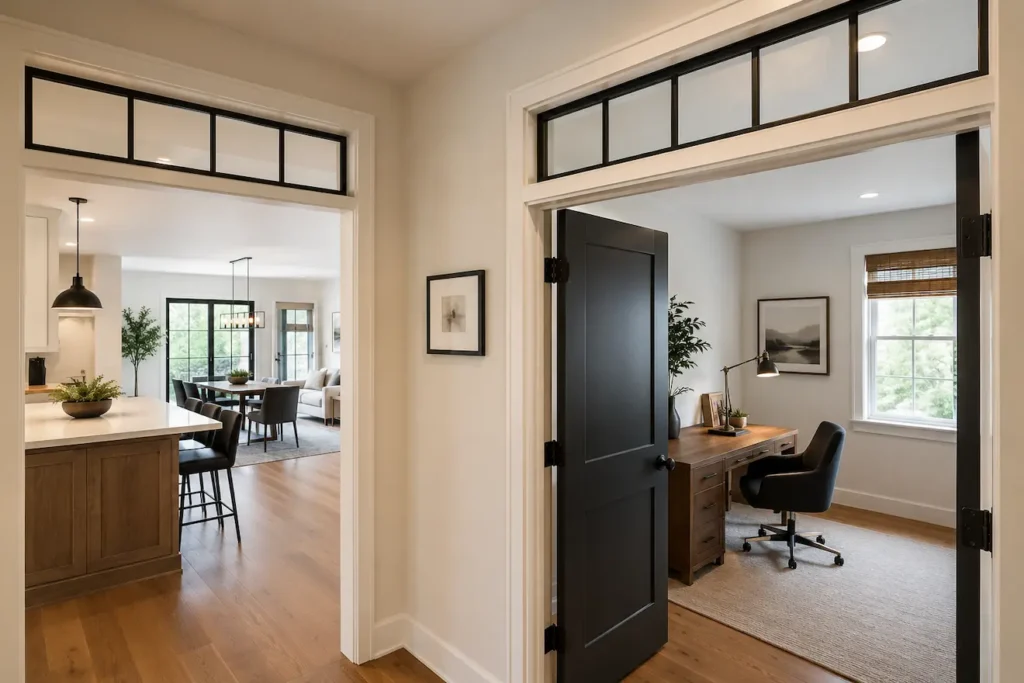
Interior transom windows can make a home feel brighter without removing the separation that certain rooms still need. They sit above doors, between connected spaces, or high on interior walls, letting light move through the home while keeping privacy, structure, and room definition in place.
That balance is the appeal. Some remodels do not need a fully open floor plan. They need smarter light movement, better visual rhythm, and a detail that makes the home feel more considered. A hallway can feel less closed in. A home office can borrow light from a brighter room. A bathroom, laundry area, or pantry can feel more finished without becoming exposed.
At Lone Star Remodeling Dallas, we think interior transom windows should be planned as part of the remodel, not added as decoration at the end. The right placement depends on layout, wall structure, ceiling height, door style, privacy needs, and how the rooms are used every day.
Interior Transom Windows Work Best When They Solve a Real Problem
Interior transom windows should not be chosen only because they look charming in photos. They work best when they solve a real design problem in the home.
The most common problem is light. Some rooms sit behind darker halls, closed doors, or interior walls that block natural light from traveling. Opening the wall completely may not make sense because the room still needs quiet, privacy, odor control, or visual separation. A transom can offer a softer answer.
Another problem is proportion. A tall wall with a standard door can feel plain, especially in a remodeled space with higher ceilings or more thoughtful trim. A transom can help the door opening feel more architectural without making the room feel overly formal.
A good remodel detail should earn its place. If the transom improves light, balance, or room connection, it usually feels intentional.
Where Interior Transom Windows Fit in the Home
Interior transom windows can work in many parts of a home, but they should be placed where the benefit is clear. They can help between a hallway and a home office, between a kitchen and pantry, above a laundry room door, near a mudroom, or between a bedroom and sitting area when privacy is handled carefully.
They can also work in older homes where the style already supports architectural trim and divided glass. In newer homes, the same idea can still work, but the shape, frame, and glass should feel cleaner. This is where modern transom windows can make the detail feel current instead of nostalgic.
The best location depends on what the homeowner wants to improve. If the goal is borrowed light, the window should connect a darker space to a brighter one. If the goal is character, it should support a doorway or wall that already needs more visual structure.
Placement should follow function first, then style.
Transom Windows Interior Choices Should Match the Remodel
Searches for transom windows interior often lead homeowners to many different looks: clear glass, frosted glass, divided panes, black frames, painted wood trim, arched forms, or simple rectangular openings. The right choice depends on the remodel around it.
A traditional remodel may support divided panes, painted trim, and a more classic profile. A cleaner modern remodel may need a simple frame, larger glass panel, or darker contrast. A transitional home may work best with a quiet rectangular design that adds light without becoming too decorative.
Interior transom windows should not feel like a separate design idea. They should match the door style, casing, wall color, ceiling height, and nearby windows. If the rest of the home is simple, the transom should be disciplined. If the home has more character, the detail can carry more personality.
The design should feel connected, not added after the real decisions were finished.
Interior Windows Between Rooms Can Share Light Without Opening Everything
Interior windows between rooms are useful when homeowners want connection without losing the purpose of each room. A full wall removal can create openness, but it can also reduce privacy, sound control, storage walls, and furniture placement.
A transom keeps more of the wall intact. It allows light to pass through while keeping the lower part of the room separated. That can be helpful for offices, playrooms, small halls, laundry spaces, and interior rooms that feel closed off.
This approach can also help a remodel avoid feeling too heavy. Instead of making every room open to every other room, the home can have moments of connection. Light moves. Sightlines improve. The room still has a boundary.
Interior transom windows are strongest when the homeowner wants a lighter home, not a completely open one.
Privacy Should Be Planned Before Glass Is Chosen
Glass changes how a room feels. It can bring in light, but it can also create visibility where homeowners do not want it. Privacy should be discussed before the size, placement, or glass type is chosen.
Clear glass may work above a pantry, hallway, office, or living area. Frosted glass may be better near a bathroom, bedroom, laundry area, or any space where the room should feel more private. Reeded, textured, or patterned glass can soften visibility while still letting light pass through.
Interior transom windows should also be placed high enough to protect comfort. The goal is borrowed light and architectural character, not a feeling that someone is always looking into the room.
The right glass choice makes the detail feel useful rather than awkward.
Ceiling Height and Door Proportion Matter
A transom needs enough vertical space to feel balanced. If the ceiling is too low or the door opening is already tight, adding glass above the door can make the wall feel crowded. If the ceiling is higher, the transom may help the opening feel more complete.
Door height matters too. A taller door with a transom can feel elegant, but a standard door with a cramped transom may feel forced. Trim size, casing width, header height, and nearby built-ins all affect the final proportion.
Interior transom windows are not only glass choices. They are proportion choices. The wall needs to be measured carefully so the final opening feels natural inside the room.
This is why the detail should be planned early, before framing, trim, and finish decisions are locked in.
Wall Structure Should Be Reviewed Early
A transom may look simple, but it still affects the wall. Before cutting into a wall or changing a doorway, the structure should be reviewed. Some walls are easier to modify. Others may contain framing, electrical wiring, plumbing, ducts, or other hidden conditions that shape the plan.
The answer may be straightforward, or it may require a different approach. In some cases, the transom can be added above an existing door with careful framing and finish work. In other cases, the wall may not be the right place for the detail.
Interior transom windows should be part of the construction conversation, not only the design conversation. That keeps the remodel grounded in what the home can support.
A beautiful detail becomes frustrating if it creates avoidable construction complications.
Modern Transom Windows Should Feel Clean, Not Trendy
Modern transom windows often work best when they are quiet. A simple rectangular form, clean trim, clear or lightly textured glass, and careful alignment can give the home more light without making the detail feel loud.
Black frames can work in some homes, especially when the remodel already uses black hardware, steel-look doors, or stronger contrast. White or painted trim may work better in softer interiors. Natural wood can add warmth if the home already uses wood tones in cabinetry, flooring, or beams.
The mistake is treating modern as automatically minimal or dramatic. Modern transom windows should support the room’s larger design. Sometimes that means a bold frame. Sometimes it means a nearly invisible detail that lets the light do the work.
The right version should still feel good years after the remodel is finished.
Sound, Smell, and Room Use Still Matter
A transom can affect how rooms connect. Even when the window does not open, the visual connection can change how private a space feels. If the transom is operable, it may also affect sound and airflow.
This matters in home offices, bedrooms, bathrooms, kitchens, laundry rooms, and playrooms. A room may need light, but it may also need quiet. A kitchen may benefit from borrowed light, but cooking smells may still need separation. A bathroom may need brightness, but privacy is more important.
Interior transom windows should be selected with daily use in mind. A detail that works well above a pantry door may not work the same way above a bedroom door.
The room’s purpose should lead the design.
Trim, Paint, and Finish Details Make the Transom Feel Built In
A transom can look unfinished if the surrounding details are not handled carefully. Trim thickness, casing alignment, paint finish, glass stop, frame depth, and wall transitions all affect the final result.
If the transom sits above a door, it should feel like part of the opening. If it sits between rooms, the frame should look intentional from both sides. That means both rooms need to be considered, not only the more visible side.
These windows often succeed because of finish details. The glass may catch attention first, but the trim is what makes the opening feel original to the remodel.
Good detailing keeps the window from looking like a cutout in the wall.
Interior Transom Windows Should Be Planned With the Full Remodel
Interior transom windows work best when they are planned with the rest of the project. Door selections, casing, wall changes, lighting, paint, flooring, and built-ins all influence whether the detail feels right.
Homeowners can review Lone Star Remodeling Dallas page to understand how window planning, energy efficiency, style, and installation quality fit into remodeling decisions. For interior window details, the same principle applies: the opening, frame, glass, and finish should support the home rather than feel separate from it.
A remodel gives homeowners the chance to improve more than one room at a time. When glass details are placed carefully, light can move better through the home and the overall design can feel more connected.
The best results come from planning the details before construction begins.
Talk Through Window Details Before Finalizing the Design
Interior transom windows can be a smart choice when a room needs more light, better proportion, or a softer connection to nearby spaces. They can help hallways, offices, pantries, laundry rooms, and shared spaces feel more open without removing every wall.
The right design depends on privacy, ceiling height, wall structure, trim style, glass type, and how the rooms are used. That is why the decision should not be made from a photo alone. A transom has to fit the home’s real layout.
At Lone Star Remodeling Dallas, we help homeowners think through the details that make a remodel feel complete. If you are considering interior transom windows or other window details as part of a remodel, contact us to talk with our team before finalizing the design.
FAQ
What are interior transom windows?
Interior transom windows are glass openings placed above doors or high on interior walls to share light and add architectural detail between spaces.
Where do interior transom windows work best?
They often work well above office doors, pantry doors, laundry rooms, hallways, mudrooms, and rooms that need borrowed light.
Are transom windows interior details or functional features?
They can be both. They add character, but they can also help light move between rooms without fully opening the wall.
Can interior windows between rooms help small spaces?
Yes. Interior windows between rooms can make smaller or darker spaces feel more connected while keeping some room separation.
Are modern transom windows only for contemporary homes?
No. Modern transom windows can work in many homes when the frame, glass, trim, and proportions match the remodel.
Should transom windows use clear or frosted glass?
It depends on privacy. Clear glass works in open areas, while frosted or textured glass may work better near bathrooms, bedrooms, or utility spaces.