

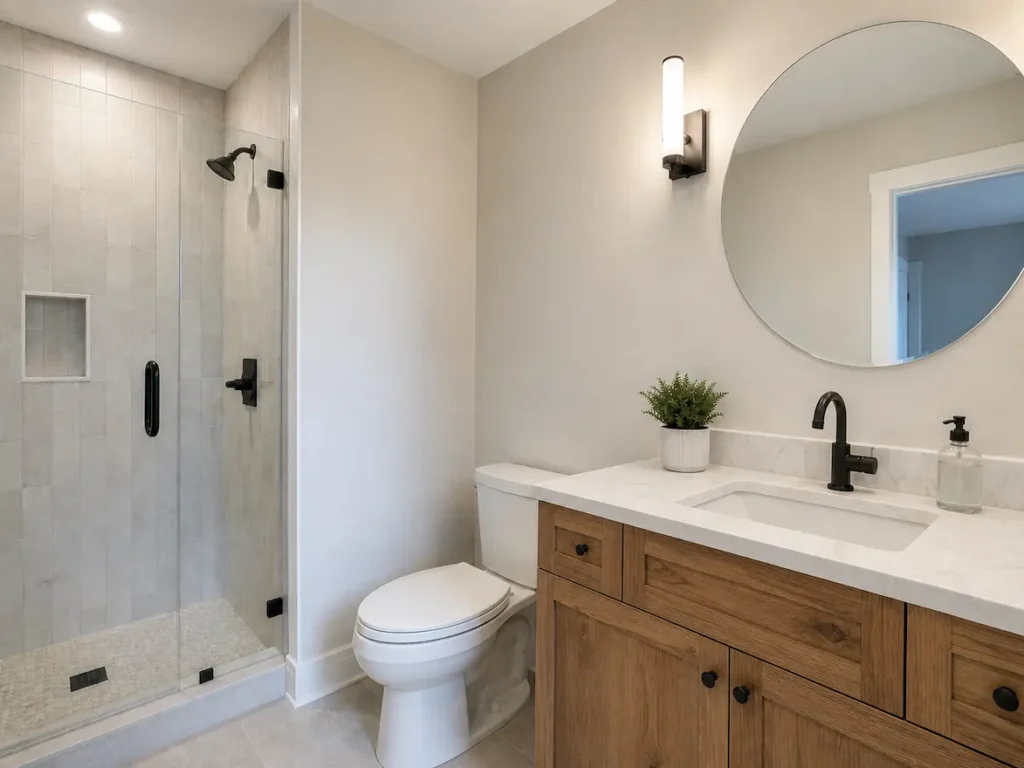
The best paint finish for bathroom walls and trim depends on more than color preference. Bathrooms deal with steam, splashing water, condensation on mirrors, and constant temperature swings that most other rooms never face. A finish that looks flawless in a bedroom can peel, bubble, or dull within a year once it lives above a shower or behind a sink that gets used every morning.
That is why sheen matters just as much as color, sometimes more. A flat wall paint hides imperfections beautifully in a hallway, but in a bathroom it absorbs moisture, holds onto mildew, and becomes nearly impossible to wipe clean. The right sheen has to balance durability, cleanability, and the amount of glare a homeowner is willing to live with under bathroom lighting.
We have repainted enough Dallas bathrooms to know that homeowners usually ask about color first and finish second, when it really should be the other way around. At Lone Star Remodeling Dallas, our interior painting team walks through sheen options before color swatches, because the wrong finish undoes even the most carefully chosen paint color within a season or two.
Why Sheen Matters More in a Bathroom Than Almost Any Other Room
Every room in a house deals with some wear, but a bathroom compresses years of humidity into a small, enclosed space. Hot showers push moisture into the air multiple times a day, and that moisture has to land somewhere. Walls, trim, and ceiling all take on some of that condensation, and the paint finish decides whether the surface handles it or absorbs it.
The best paint finish for bathroom walls needs to resist water without trapping it underneath the surface. A finish with too little sheen lets moisture soak in over time, which is how bubbling and peeling start near the shower or tub. A finish with too much gloss can highlight every drywall seam, nail pop, and uneven patch under bathroom lighting, which is its own kind of frustration once the room is finished. Finding the best paint finish for bathroom conditions specifically, rather than borrowing a finish meant for a living room or hallway, is what keeps the wall looking fresh past the first year.
This is why sheen selection should happen early in a bathroom remodel, not as an afterthought once tile and fixtures are already chosen. A finish that works with the room’s ventilation, lighting, and daily use holds up far longer than one chosen purely because it matched a color swatch in a showroom.
What the Best Paint Finish for Bathroom Walls Actually Needs to Do
A bathroom wall finish has three jobs at once. It needs to shed water instead of absorbing it, it needs to survive regular wiping and cleaning without losing its sheen, and it needs to look intentional rather than clinical under the room’s lighting. Very few finishes handle all three equally well, which is why picking the best paint finish for bathroom walls usually comes down to tradeoffs rather than one obvious winner.
Satin finishes tend to be the most common answer for bathroom walls because they resist moisture better than flat or eggshell, clean up easily, and still soften the light instead of bouncing it around the room. Semi-gloss goes further on durability and is often the better choice directly around a shower or tub, though it will show more surface imperfections.
The best paint finish for bathroom walls in a specific home really depends on how the room is used. A powder bathroom with no shower behaves differently than a primary bathroom with a soaking tub and daily steam. Matching the finish to the actual humidity level in that specific room matters more than following a blanket rule for every bathroom in the house.
Choosing the Best Paint Type for Bathroom Trim and Doors
Trim and doors take a different kind of abuse than walls. They get bumped by towels, brushed by hands leaving the shower, and wiped down more often during cleaning. The best paint type for bathroom trim usually leans toward a higher sheen than the walls, both for durability and for the clean, defined look trim is supposed to provide against a softer wall finish. Choosing the best paint finish for bathroom trim separately from the wall finish is one of the small decisions that makes the whole room read as intentional rather than mismatched.
Semi-gloss remains the standard choice and, for most homeowners, the best paint finish for bathroom trim and doors because it holds up to repeated wiping and resists moisture better than lower-sheen options. Some homeowners push for high-gloss trim in more traditional bathrooms, and it can look sharp when the surface underneath is properly prepped and sanded, though it also shows brush marks and imperfections more readily than semi-gloss.
Getting the base coat right matters as much as the topcoat when it comes to trim. Bathroom trim needs a primer suited for moisture-prone areas, and skipping that step is one of the fastest ways to see peeling around baseboards or door frames within the first year, regardless of how good the finish coat looks going on.
Understanding Bathroom Paint Finish Beyond the Word “Sheen”
Bathroom paint finish is often treated as a single decision, but it actually involves several layered choices working together. Sheen is the most visible one, but the formula underneath it matters just as much, since bathroom-specific products usually include additives designed to resist mildew in ways standard interior paint does not.
Ceiling paint deserves its own thought here too, since the best paint finish for bathroom ceilings is rarely the same product used on the walls. Bathroom ceilings sit directly above steam and hot air, which makes them one of the first places mildew shows up if the wrong product is used. A flat ceiling paint rated for bathrooms, or a low-sheen finish designed for moisture, tends to outperform a standard flat ceiling paint pulled from a leftover can in the garage.
Bathroom paint finish decisions also connect to color in ways homeowners do not always expect. Darker colors in higher sheens can create a dramatic look, but they also show water spots and streaking more visibly than lighter tones in the same sheen. Testing a sample on the actual wall, under the bathroom’s real lighting, avoids a lot of second-guessing about the best paint finish for bathroom color pairings after the whole room is painted.
Moisture-Resistant Paint and Why Ventilation Still Comes First
Moisture-resistant paint helps a bathroom hold up over time, but paint alone cannot solve a ventilation problem. A bathroom without a working exhaust fan, or one that gets shut off too soon after a shower, will push moisture into the walls no matter how good the paint is. Even the best paint finish for bathroom walls slows down damage rather than replacing airflow altogether.
The best results come from pairing a properly rated moisture-resistant paint with a bathroom that actually vents steam out of the room. Running the fan for fifteen to twenty minutes after a shower gives paint a fighting chance against the daily humidity a closed, unventilated bathroom traps indefinitely.
Homeowners renovating an older bathroom sometimes discover the exhaust fan is undersized or was never properly vented outside. Fixing that during a remodel, before repainting, protects the investment in moisture-resistant paint far more than choosing a premium product to compensate for weak ventilation.
Common Mistakes That Shorten the Life of Bathroom Paint
The most frequent mistake is skipping proper surface preparation before repainting a bathroom, regardless of which product ends up being the best paint finish for bathroom walls in that particular room. Old caulk lines, soap residue, and existing mildew all need to be cleaned and addressed before a new coat goes on, because paint applied over a compromised surface fails faster regardless of the product’s quality or price point.
Another common misstep is choosing a finish based purely on how it photographs rather than how the specific bathroom performs day to day. A flat or matte finish might look elegant in a design magazine, but without confirming it is the best paint finish for bathroom conditions with daily showers and limited ventilation, it is often the wrong long-term choice no matter how appealing it looks in a photo.
Rushing the drying and curing time between coats causes problems too. Bathroom paint needs adequate time to cure before it faces regular steam, and resuming normal use too soon can trap moisture in a finish that has not fully hardened, leading to soft spots or early peeling near the shower.
Planning Paint Finishes Before the Rest of the Bathroom Remodel
Paint finish decisions work best when they are made alongside tile, fixtures, and lighting rather than squeezed in at the end of a bathroom remodel. The finish interacts with how light bounces off tile, how visible grout lines become, and how a vanity mirror reflects the walls around it, so treating the best paint finish for bathroom walls as a final afterthought often means redoing work that could have been planned correctly the first time.
It also helps to think about how the bathroom will actually be used before locking in a finish. A guest bathroom that sees occasional use has different moisture demands than a primary bathroom used twice a day by an entire household. Matching the best paint finish for bathroom sheen and formula to real usage patterns, rather than a generic bathroom standard, produces a finish that holds up on the timeline the household actually needs.
Sequencing matters too. Painting before certain trim and fixture installations, and after drywall and caulking are complete, avoids touch-up work that rarely blends with the surrounding wall. A clear plan for when painting happens in the timeline protects the finish from unnecessary rework later.
When to Bring in a Local Painting Team
Some bathroom painting projects are simple enough to handle without outside help, but rooms with extensive water exposure, existing mold concerns, or complicated trim work usually benefit from a team that has seen how the best paint finish for bathroom conditions performs in real Dallas bathrooms over time. A local team can also match products to the specific humidity levels a given bathroom deals with, rather than defaulting to a one-size-fits-all recommendation.
Coordinating paint with the rest of a bathroom remodel, including tile work, caulking, and fixture installation, keeps the finish from being compromised by work that happens after the paint has cured. Sequencing these trades correctly protects the investment in both the paint and the surrounding materials.
At Lone Star Remodeling Dallas, we help homeowners choose the best paint finish for bathroom projects based on ventilation, lighting, and how the room actually gets used day to day. If you are planning a bathroom repaint or a full remodel, contact us and we can walk through the finish options that fit your space.
FAQ
What is the best paint finish for bathroom walls?
Satin usually offers the best balance of moisture resistance, cleanability, and softened light. Semi-gloss works well in higher-splash zones directly around a shower or tub.
Should bathroom trim be a different sheen than the walls?
Yes. Trim and doors generally hold up better with semi-gloss or high-gloss, since they get wiped and bumped far more often than the surrounding walls.
Does moisture-resistant paint replace the need for a bathroom fan?
No. Moisture-resistant paint slows down damage, but a working exhaust fan is still essential for pulling steam and humidity out of the room.
Can flat paint work in a bathroom?
Flat paint is generally not recommended for bathroom walls, since it absorbs moisture and holds onto mildew. It can sometimes work on ceilings if the product is formulated for bathrooms.
When should paint be scheduled during a bathroom remodel?
Painting should happen after drywall and caulking are complete but before certain trim and fixture installations, to avoid touch-up work that rarely blends seamlessly.