

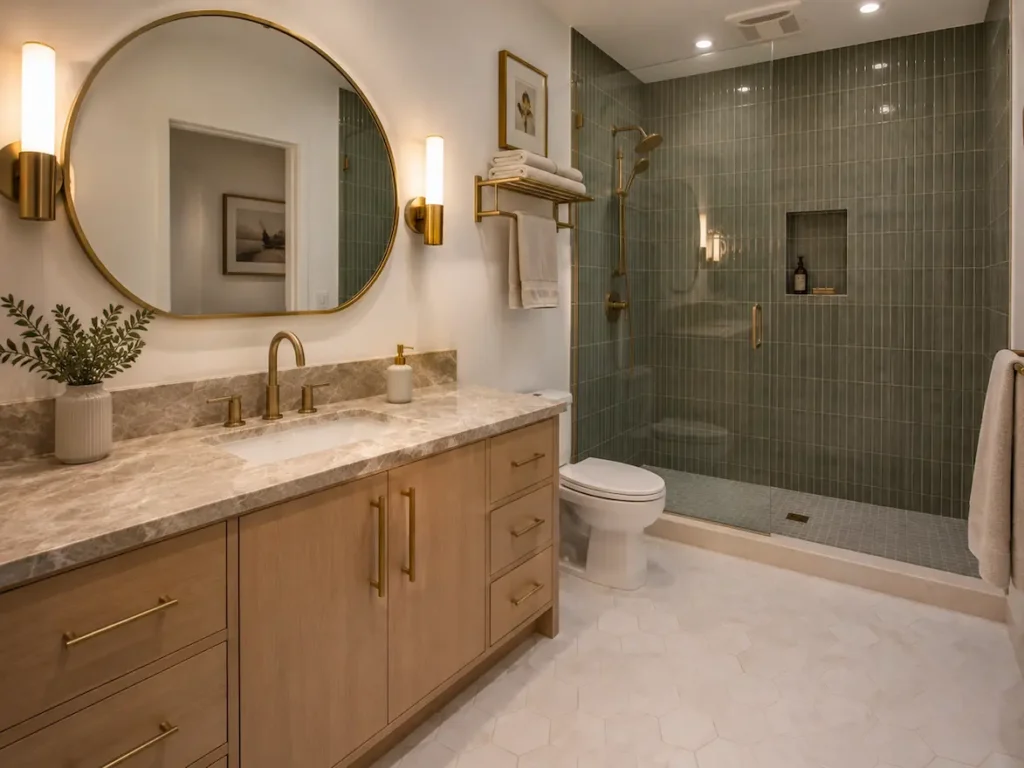
An art deco bathroom can sound like a purely visual decision. The mind goes straight to bold tile, strong geometry, brass details, black accents, mirrors, pattern, and a room that feels more designed than ordinary. That look can be beautiful, but a bathroom still has to work before it gets to impress anyone.
The room needs storage. It needs light that helps in the morning and feels softer at night. It needs materials that handle water, cleaning, steam, and daily use. It needs a layout that makes sense when two people are getting ready, towels are wet, and the vanity is holding half the morning routine.
At Lone Star Remodeling Dallas, we think an art deco bathroom works best when the style is planned around real life. The goal is not to copy a period room piece by piece. The goal is to use the character of the style in a way that supports the homeowner, the house, and the remodel budget.
Start With the Mood of the Art Deco Bathroom
The fastest way to overload this kind of bathroom is to treat every surface like it needs to make a statement. Patterned floors, bold walls, dramatic lighting, shiny fixtures, framed mirrors, dark paint, and strong contrast can all belong in the same style family, but they do not all need to compete in one room.
A stronger plan starts with mood. Do you want the bathroom to feel polished and hotel-like, dark and dramatic, bright and classic, or warm with only a few deco references? That decision gives the rest of the remodel more discipline.
This matters because art deco can move in different directions. It can feel bold, quiet, glamorous, graphic, or restrained. The right direction depends on the home, the room size, the natural light, and how much visual energy the homeowner wants to live with every day.
A clear mood keeps the bathroom renovation from turning into a collection of nice pieces that do not quite belong together.
Let Layout Protect the Style
A beautiful art deco bathroom can still feel frustrating if the layout is weak. The vanity may be too small. The shower door may swing into the wrong path. The toilet may feel exposed. The storage may be missing. The lighting may look good but fail at the mirror.
Layout should come before finish selections because it decides how the room will feel in motion. Where does someone stand to get ready? Where do towels live? Can drawers open without hitting the door? Does the shower have enough room to feel comfortable? Is the vanity large enough for the routine?
Once those answers are clear, the style has a better foundation. The tile can frame the room. The mirror can become a focal point. The fixtures can support the mood. Without that planning, even expensive finishes may feel like decoration over a room that still does not work.
Homeowners planning a larger project can review our bathroom remodeling service page to understand how layout, materials, and planning shape bathroom projects.
Choose One Strong Visual Anchor
An art deco bathroom usually needs one clear visual anchor. That may be a patterned floor, a framed vanity wall, a bold mirror, a dramatic light fixture, a black and white tile layout, or a shower detail with geometric rhythm.
The anchor gives the room identity. It also helps avoid the common mistake of adding too many statement pieces. When everything is important, nothing feels intentional.
For a smaller bathroom, the floor may be the best place for pattern because it adds character without crowding the walls. In a larger bathroom, the vanity wall or shower surround may carry the style better. A powder bathroom can usually handle more drama because it is used differently than a primary bath.
A clear anchor also helps control bathroom remodel cost. Instead of upgrading every finish, homeowners can invest in the element that carries the most visual weight and keep surrounding materials quieter.
Make Storage Feel Built In, Not Added Later
Storage is rarely the first thing people imagine when they picture an art deco bathroom, but it decides whether the room stays polished after the remodel.
A beautiful vanity loses its effect if the counter is always crowded. Open shelves lose their charm when they become a landing place for every extra bottle. A medicine cabinet, drawers, recessed storage, or a tall linen cabinet can make the room feel cleaner without taking away from the style.
The trick is making storage look like it belongs. Flat cabinet fronts, framed details, rich wood tones, dark paint, glass accents, or simple metal hardware can support the design while keeping the room practical.
The right bathroom design should not make homeowners choose between beauty and order. The best version of the style gives everything a place, then lets the finishes breathe.
Use Materials That Can Handle the Room
Bathrooms test materials every day. Steam rises. Water hits the floor. Counters get splashed. Grout needs cleaning. Hardware gets touched constantly. A bathroom can look perfect on day one and feel tired quickly if the material choices were made only for the photo.
Tile is often central to this style, but the exact choice matters. Patterned tile can give the room strong identity. Larger wall tile can calm the space. A durable counter can protect the vanity area from daily use. Fixtures should feel good in the hand, not only in the showroom.
This is where homeowners should be honest about maintenance. A high-contrast room can look sharp, but it may show water spots, dust, or soap residue more quickly depending on the material. A softer palette can still feel deco if the lines, lighting, and details are strong.
Bathroom remodeling services should help homeowners compare those tradeoffs before anything is ordered.
Lighting Should Feel Designed and Useful
Lighting is one of the easiest places to make an art deco bathroom feel finished. It is also one of the easiest places to make the room less practical.
A decorative fixture can give the bathroom character, but mirror lighting still needs to help with daily grooming. Overhead lighting can brighten the room, but it may cast shadows if it is the only source. Accent lighting can add warmth, but it should not replace useful brightness.
The best plan usually layers light. Vanity lighting for the face. Ceiling lighting for the room. Accent lighting if the design needs softness or drama. The fixture style can carry art deco influence through shape, metal finish, glass, or symmetry without making the bathroom feel theatrical.
Good lighting supports both the look and the routine. That balance matters in a room used every day.
Know Where the Budget Can Shift
An art deco bathroom can be simple or highly detailed, and that range affects budget. Tile pattern, custom vanity work, plumbing fixtures, lighting, shower glass, floor changes, wall preparation, and layout adjustments can all shape bathroom remodel cost.
The biggest budget question is scope. Keeping the existing layout may help control cost. Moving plumbing, changing the shower footprint, expanding storage, or rebuilding walls can add complexity. The style itself is not the only cost driver. The work behind the style matters just as much.
Homeowners should decide where the design needs to feel special and where restraint makes more sense. A strong floor with simple walls may be enough. A dramatic vanity with quieter tile may work better. A custom mirror and lights may carry the style without pushing every finish higher.
A smart remodel protects the parts that matter most and avoids spending heavily where the room will not feel the difference.
Keep the Art Deco Bathroom Connected to the Home
A bathroom can have its own personality, but it should not feel like it belongs to a different house. This is especially true with a style as recognizable as art deco.
The design can still feel bold while respecting the rest of the home. If nearby rooms are warm and traditional, the bathroom may lean into wood, brass, and softer contrast. If the home is cleaner and more modern, the room may use black accents, symmetry, and sharper tile lines. If the house already has character, the bathroom can echo that without becoming a theme.
An art deco bathroom should feel intentional when the door opens, not surprising in the wrong way. The style should elevate the home instead of fighting it.
A Better Bathroom Starts With the Right Planning
The best art deco bathroom is not the one with the most dramatic tile or the most expensive fixture. It is the one that feels beautiful, useful, and believable inside the home.
The room needs a clear mood, a working layout, a strong visual anchor, practical storage, durable materials, good lighting, and a budget that follows priorities. When those decisions line up, the style feels polished instead of forced.
At Lone Star Remodeling Dallas, we believe bathroom design should lower uncertainty before the work starts. Homeowners make better choices when scope, cost, function, and style are discussed together. If you are planning a bathroom update and want a clearer path before committing, you can start through the contact page and talk through the next step with the team.
FAQ
What makes an art deco bathroom feel authentic?
Geometric lines, contrast, symmetry, strong lighting, framed mirrors, and polished details can create the feel without overloading the room.
Is an art deco bathroom expensive to remodel?
It depends on scope, tile, fixtures, lighting, custom details, and whether plumbing or layout changes are needed.
Can art deco work in a small bathroom?
Yes. A small bathroom can use patterned flooring, a bold mirror, strong lighting, or focused contrast without feeling crowded.
What colors work best for this bathroom style?
Black, white, cream, brass, deep green, navy, soft gray, and warm wood tones can all work when balanced well.
Should I use patterned tile everywhere?
Not usually. One strong tile moment often works better than using pattern across every surface.
Do I need bathroom remodeling services for this style?
Professional help is useful when layout, tile work, lighting, plumbing, or custom vanity details are part of the project.