

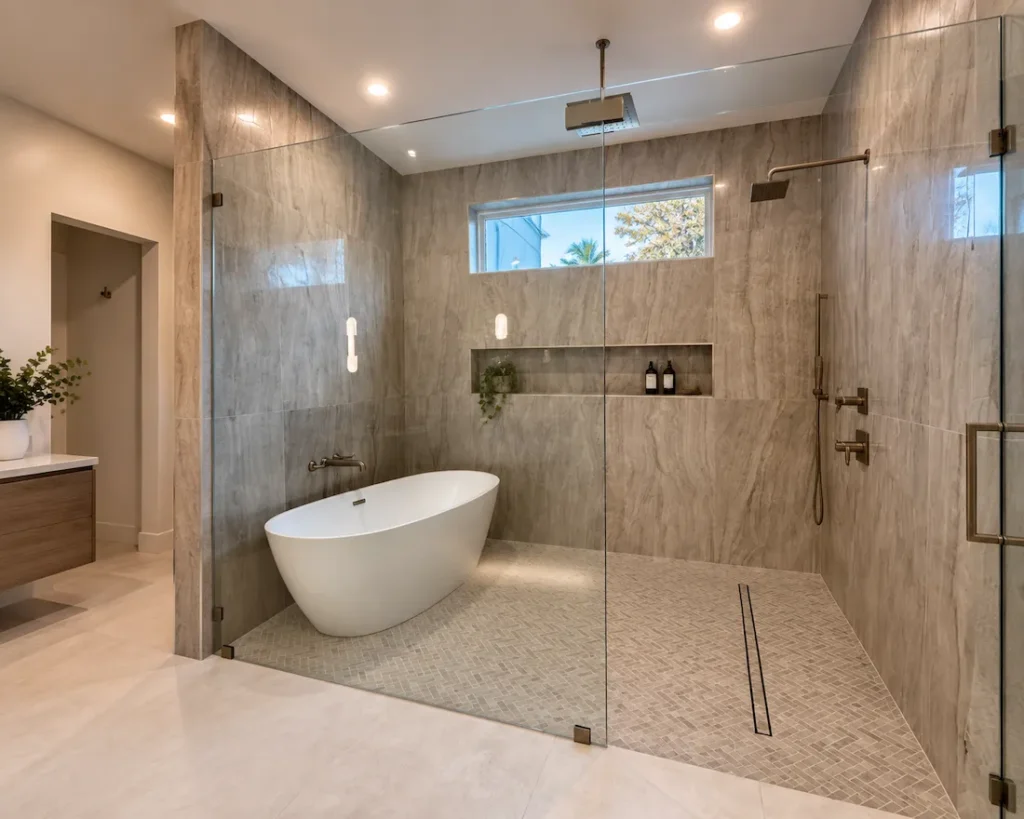
Shower remodel cost is the question Dallas homeowners ask most often before a bathroom renovation, and the one that generates the most confusion when online figures don’t match what a local contractor puts in front of them. A national average pulled from a home improvement platform and an estimate from a licensed contractor who has walked your specific bathroom are two different numbers, and understanding the gap requires knowing which variables actually drive cost in a real project.
In residential bathroom remodeling, shower remodel cost compounds quickly across a set of decisions that interact with each other: shower size and configuration, whether plumbing can stay in place or needs to be relocated, how the waterproofing system is specified, what tile was selected and how complex the installation pattern is, and what type of glass enclosure finishes the space. Two homeowners with bathrooms of similar size can receive estimates that differ by $15,000 or more based on choices in each of those categories, and neither estimate is wrong.
At Lone Star Remodeling & Construction, the budget conversations we have with homeowners during planning start with those variables, not with a national average.
What a Shower Remodel Scope Actually Covers
Before evaluating a shower remodel cost estimate, it helps to understand what a complete scope of work includes, because not every estimate prices the same list of items. A full shower remodel in most Dallas area homes covers demolition and debris removal, waterproofing system installation, plumbing rough-in adjustments where needed, tile installation on floor and walls, a glass enclosure or frameless panel system, valve and fixture work, and all finish work through final inspection.
The variables within that list are significant. Demolition cost changes based on what’s behind the existing walls. A shower tiled over cement board with a proper membrane comes apart cleanly. One where a previous contractor used drywall behind the tile, which is more common in older DFW homes than it should be, requires additional remediation before new waterproofing can go in. That difference alone can add $800 to $1,500 to the demo phase, and it isn’t visible until the tile comes off. Permit requirements for shower remodel cost estimates in Dallas depend on scope. Plumbing modifications, electrical changes, and structural alterations all trigger permits. A contractor who includes permit fees and manages inspections as part of the project is giving a complete picture of the actual shower remodel cost.
Our bathroom remodeling page covers what that planning process looks like from the first walkthrough through final installation.
Shower Waterproofing Cost: What Protects the Investment Long Term
Waterproofing is the component of shower remodel cost that homeowners most consistently undervalue during planning, and the one that generates the most expensive problems when it fails or gets skipped in favor of a cheaper specification. A shower with failed waterproofing doesn’t announce the problem immediately. It leaks slowly into the wall cavity or subfloor for months before the damage becomes visible, and by then the remediation cost routinely exceeds the original waterproofing investment by a significant margin.
Shower waterproofing cost in a standard Dallas area residential shower runs between $400 and $900 for a full membrane system applied over cement board substrate. Sheet membrane systems applied with a bonding compound perform reliably in most applications. Liquid-applied membranes produce a seamless barrier that eliminates seam vulnerability at the wall-to-floor transition, which is where most residential shower waterproofing failures originate. Liquid systems run slightly higher in material cost but require less labor for application and eliminate compatibility questions between substrate and membrane products.
The substrate beneath the membrane matters equally. Cement board is the standard specification for shower walls and provides a stable, moisture-resistant base for both membrane and tile. Foam backer board systems that combine substrate and waterproofing in a single product have gained significant adoption because they reduce installation steps and eliminate compatibility concerns. Material cost runs higher than cement board alone, but combined labor for substrate and waterproofing can be comparable when the project is sized correctly.
Tile Labor for Showers: Where Format and Pattern Drive the Number
Tile labor for showers is the most variable line item in most shower remodel cost estimates, and the category where homeowner selections have the most direct impact on the final budget. Labor cost in tile installation is driven by tile format, installation pattern complexity, and the amount of cut work the shower configuration requires.
Large-format tiles in the 24×24 or 12×24 inch range require more precise substrate preparation than standard 4×12 or 3×6 subway formats. Each tile covers more surface area, which means any variation in wall plane or substrate flatness reads across the face of a single piece rather than disappearing into a grout joint. The labor required to produce a flat, lippage-free large-format installation is meaningfully higher, and that difference belongs in the estimate from the start.
Pattern complexity multiplies cut labor. A straight stack or running bond on a rectangular wall produces minimal waste and straightforward sequences. A diagonal installation on the same wall increases material waste by 10 to 15 percent and adds cut labor at every perimeter edge. Herringbone floors, feature walls with multiple tile types, and book-matched slab panels each add labor hours that accumulate quickly in a shower where the total wall surface area may only be 80 to 100 square feet. Niche construction adds cost in both tile labor and waterproofing: a single well-executed recessed niche adds two to four labor hours depending on size and tile format. Two niches, a bench, and a full-height feature wall represent a materially different shower remodel cost than a basic three-wall tile installation.
Shower Valve Replacement and Plumbing Scope
Shower valve replacement appears in most full shower remodel cost estimates and consistently generates downstream effects that homeowners underestimate. A valve replaced in kind in the same location is a straightforward swap adding a few hundred dollars to the plumbing scope. A valve upgrade to a pressure-balance or thermostatic system, or one that involves relocating the valve or adding body sprays and a rain head supply, requires roughing in new supply lines, which changes the scope materially.
Thermostatic valve systems allow water temperature to be set independently of flow volume and represent one of the more meaningful functional upgrades available in a custom shower remodel. The valve body runs between $400 and $900 depending on manufacturer and configuration, with installation labor adding another $300 to $600 depending on access conditions and the number of outlets being supplied. In a shower remodel that already involves opening the wall for tile work, the incremental cost of upgrading the valve system is lower than it would be as a standalone project, making this one of the upgrades worth evaluating during planning rather than after completion.
Drain relocation carries significant weight when it appears in a shower remodel cost estimate. Moving a shower drain in a Dallas home on a concrete slab requires cutting the slab, rerouting the drain line, patching the concrete, and allowing cure time before new substrate and waterproofing go in. That scope typically runs between $1,500 and $3,500 depending on the distance of the relocation and accessibility of the existing drain stack. Any layout change from the existing drain location needs this scope in the estimate from the beginning, not as a change order after demolition.
Custom Shower Glass Pricing: What Drives the Range
Custom shower glass pricing is the element of shower remodel cost that surprises homeowners most when they receive a detailed estimate. The range for a frameless glass enclosure in a standard Dallas area shower runs from approximately $1,200 on the lower end for a basic fixed panel and door to $4,500 or more for a fully custom frameless configuration with multiple panels, a hinged door, and premium hardware in a specific finish.
Glass thickness, enclosure configuration, and hardware specification drive the range. Frameless panels in 3/8-inch tempered glass are the standard specification for most residential enclosures and provide adequate rigidity for fixed panels up to 48 inches wide. Half-inch glass is appropriate for wider spans or panels that carry a towel bar load. The cost difference between 3/8-inch and 1/2-inch for a full enclosure runs between $300 and $700 depending on total glass area.
Hardware finish has a meaningful impact on custom shower glass pricing because each finish requires different surface treatments and carries different fabrication lead times. Standard chrome and brushed nickel are typically in stock. Matte black, brushed gold, and oil-rubbed bronze add 10 to 20 percent to hardware cost and can extend fabrication by one to two weeks. That lead time consideration belongs in the project schedule conversation, not just the budget one, because a glass enclosure on back order stalls the project at final completion when everything else is already done.
Where Shower Remodel Budgets Rise in Dallas Homes
The categories that most consistently push shower remodel cost above initial expectations are unexpected substrate conditions, pattern complexity that wasn’t priced in early conversations, plumbing upgrades decided after demolition, and glass specifications confirmed too late in the design process.
Substrate conditions carry the least predictability before demolition. In Dallas area homes built between 1970 and 2000, original tile installed directly over drywall with no membrane is more common than it should be. Both conditions require additional remediation before new waterproofing goes in, and a responsible contractor flags these as contingencies in the estimate rather than absorbing them into a fixed price before the walls are open.
Material upgrades decided after signing are the most controllable budget variable. A homeowner who falls in love with a book-matched slab panel during tile selection is making a different project than the one estimated. Confirming material selections before the estimate is signed rather than during installation keeps shower remodel cost predictable through the full project. The contractors who produce the most accurate shower remodel cost estimates are the ones who ask the right questions before putting a number on paper.
Building a Budget That Holds Through Construction
A shower remodel cost budget that survives contact with construction requires specificity at the planning stage: material selections confirmed before signing, a waterproofing specification that matches the long-term performance expectations for the space, plumbing scope that accounts for any valve or drain changes being considered, and a glass specification that includes hardware finish and fabrication lead time.
Homeowners who enter the budget conversation knowing which upgrades matter most and which variables they’re willing to adjust receive more accurate estimates and experience fewer surprises mid-project. The gap between a realistic shower remodel cost and a number that falls apart during construction is almost always a planning gap, not a pricing gap.
Reach out to Lone Star Remodeling & Construction to review your options before committing to materials or scope, and build a shower remodel cost budget that reflects the project you actually want to build.
FAQ
What is the average shower remodel cost in Dallas, TX?
A basic shower remodel involving standard tile, a prefabricated or entry-level glass enclosure, and no plumbing relocation typically runs between $6,000 and $12,000 in the Dallas area. A mid-range custom shower with large-format tile, a frameless glass enclosure, and a thermostatic valve system generally falls between $14,000 and $22,000.
Why does shower waterproofing cost matter so much in the overall budget?
Waterproofing is the system that keeps moisture out of the wall cavity and subfloor behind the tile. When it fails, the damage is slow and invisible, leaking into the structure for months before showing up as staining, soft flooring, or a ceiling failure below.
How does tile selection affect shower remodel cost?
Tile selection affects both material and labor cost. Large-format tiles require more precise substrate preparation and more labor hours per square foot than standard formats. Complex patterns increase cut labor and material waste. Niche construction, bench seats, and accent borders each add labor hours that compound meaningfully in a shower with under 100 square feet of wall surface.
What does custom shower glass pricing include?
Custom shower glass pricing covers glass fabrication, hardware, and installation. A basic single panel and door in 3/8-inch glass with standard hardware runs between $1,200 and $2,000 installed. A fully custom frameless enclosure with multiple panels, a hinged door, and premium hardware in a specific finish runs between $2,800 and $4,500 or more.
When does a shower remodel require a permit in Dallas?
Shower remodels involving plumbing modifications, electrical work, or structural changes require permits from the City of Dallas Development Services department or the applicable DFW municipality. A cosmetic remodel replacing tile and fixtures in kind without altering mechanical systems may not require a permit, though the threshold varies by scope and municipality.
How long does a shower remodel take?
A standard shower remodel in the Dallas area runs between three and six weeks of active construction depending on scope and material lead times. Waterproofing and grout cure times both require pauses in the installation sequence that extend the overall timeline beyond what active labor hours alone would suggest.