

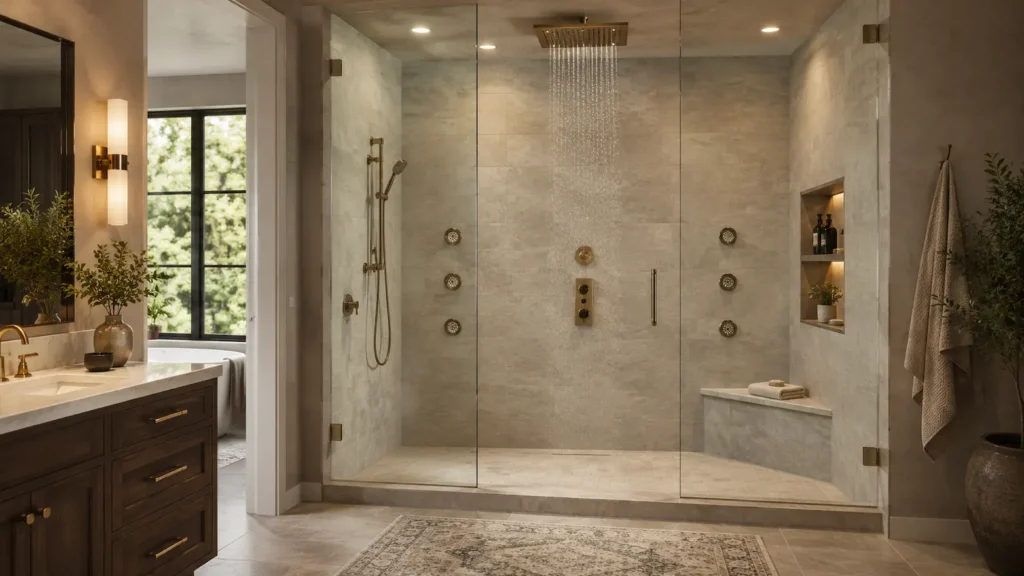
A luxury shower system rarely begins as a fixture decision. It begins as a frustration. The shower takes too long to warm up. The pressure drops every time the dishwasher runs. The showerhead is mounted at the wrong height for whoever uses it most. The grout has been turning gray for two winters. By the time a homeowner starts looking seriously at a luxury shower system, the existing shower has been making its case for years.
The temptation in that moment is to chase the visible parts first. The rainhead. The body sprays. The chrome that sparkles under showroom lights. We have seen those projects land well. We have seen them disappoint. The difference is rarely the hardware. It is almost always the planning that happened, or did not happen, before the hardware showed up on the truck.
At Lone Star Remodeling Dallas, the luxury shower system projects that age well share one habit. They were planned in the right order. Plumbing first. Layout second. Fixtures and finishes earned on top. This guide walks that order, with the decisions worth making before a single valve gets opened in the wall.
What a Luxury Shower System Actually Includes
The phrase gets thrown around loosely in showrooms and catalogs. A luxury shower system is a designed shower experience built around a thermostatic valve, multiple water outlets, and an intentional layout. It is not a single showerhead with a fancier finish.
In practice that usually means a thermostatic valve at the center. A fixed overhead or rainhead. A handheld wand on a slide bar. Sometimes body sprays at one or two heights. Sometimes a built-in bench, a niche, or a steam component. Not every project needs every element. The strongest systems earn each outlet a place.
Most homeowners do not actually want more water. They want better water. A system with three well-placed outlets and a steady temperature will feel more refined than a noisy version with seven outlets fighting each other. Restraint is part of the design language here, even when the catalogs push the opposite.
That is also why the spec sheet is the worst place to start. The right question is how the household actually showers. How long. At what time of day. With what kind of pressure preference. The system gets designed from those answers backward, not from a wishlist forward.
Plumbing and Pressure Decide What Is Possible
Before anything visible gets specified, the plumbing has to be honest about what the house can deliver. A luxury shower system places real demand on the supply lines, the hot water capacity, and the drain. If any of those three is undersized, no fixture choice fixes it later.
Supply lines feeding most older bathrooms were sized for one showerhead, a sink, and a toilet. A multi-outlet system often needs larger runs, sometimes a dedicated branch from the main, sometimes a recirculating loop on the hot side. Homeowners who skip that step end up with a stunning shower that runs cold the moment body sprays activate.
Hot water capacity is the second variable. A tank sized for the original build rarely keeps up with multiple outlets running at once. The answer might be a larger tank, a tankless unit, or a dedicated secondary heater for the primary bathroom. It depends on the rest of the house, not on a catalog number.
Drain capacity is the quietest variable and the one most projects forget. A two-inch drain that handled a single head will struggle under a multi-outlet flow. A slow drain in a beautiful shower ruins the daily experience. We walk every homeowner through that math before tile gets ordered.
Layout, Zones, and Where the Outlets Should Actually Go
A luxury shower system that ignores how the body moves through the space ends up feeling like a showroom display. The layout carries the experience day to day. Where the user stands. Where the spray lands. Where the controls sit so the water starts without stepping under a cold blast first.
The strongest layouts treat the shower as a small choreography. The valve sits within reach without standing under any of the outlets. The rainhead lands directly overhead, sized to the body, not floated decoratively toward the ceiling. The handheld lives on a slide bar at a height that works for the shortest and tallest users in the home.
Body sprays, when included, get placed at the right heights for the people who live there. Not the catalog default. That single decision separates a system that feels personal from one that feels generic. The bodies in the household are the actual brief for the design.
A bench at the right height. A curb-free entry when the slab allows it. A niche placed where the hand reaches without bending. A floor slope that pulls water cleanly to the drain. These are layout decisions, not finish decisions. They decide how the shower feels more than the tile pattern ever will.
Finishes That Hold Up to Daily Use
A luxury shower system runs more water across more surfaces than a standard shower. The finishes have to absorb that without aging before the rest of the bathroom does. Materials that dazzle on a showroom day-one display are not always the materials that look right after two real years of use.
Tile choice is the first conversation. Porcelain handles water and cleaning chemicals better than most natural stone here. Larger formats reduce grout lines, which reduces the surface area where grime collects. Grout itself deserves real attention, because the wrong grout in a high-flow shower becomes a maintenance burden quickly.
Hardware finish is the second conversation, and the one most often rushed. Polished chrome shows water spots within hours. Brushed nickel and satin hide them better. Living finishes like unlacquered brass develop a patina some homeowners love and others regret. The right answer is personal and deserves a real conversation.
Glass is the finish nobody plans for and everyone notices later. A clear panel without a proper coating shows every water spot every morning. A coated glass panel, properly maintained, stays clear for years. The upgrade cost is small. The daily difference is significant.
Bathroom Remodel Cost and the Variables That Actually Move the Number
A luxury shower system lives inside a larger bathroom renovation budget. Homeowners deserve a clear picture of what actually drives the bathroom remodel cost before they commit. From what we see across projects, the biggest variables are not on the wall. They are behind it.
Plumbing relocation is the first major driver. Moving the valve, adding outlets, upsizing supply lines, or rerouting the drain all add real cost and time. A shower that lives in the original footprint is significantly cheaper than one that moves across the bathroom. Sometimes the better design is worth the move. Sometimes the original footprint is the smarter call.
Material grade is the second driver. Tile, glass, hardware, and the valve itself all come in a wide spectrum of quality. From our experience, the smartest spend lives at the valve and the glass, because those two carry the daily experience. Tile and hardware can flex more, depending on the rest of the design.
The third driver is the unexpected. Older homes especially surprise the project once the wall opens. Outdated plumbing. Hidden water damage. Framing that needs reinforcement. We recommend setting aside 10 to 20 percent of the total budget as a buffer. The higher end suits older homes and structural work.
When a Luxury Shower System Is the Right Call
Not every bathroom needs this level of investment. We say that openly because the industry rarely does. A luxury shower system makes the most sense in a bathroom the household uses every day. The existing shower has been a real source of frustration. The rest of the layout can carry the upgrade without awkward compromises.
A guest bathroom used twice a year rarely justifies the cost. A primary bathroom anchoring the morning routine for two adults often does. A small bathroom with structural constraints can sometimes support a thoughtful system and sometimes cannot. That answer comes from walking the space, not from a yes-to-everything sales pitch.
Timing matters more than most homeowners realize. A luxury shower system installed during a broader bathroom renovation integrates more cleanly than one retrofitted later as a standalone upgrade. The plumbing is already open. The walls are already exposed. The trades are already on site. Adding the system during a planned remodel is usually cheaper and less disruptive than coming back six months later.
We have advised homeowners to scale the system down, scale it up, or wait a year. Sometimes the rest of the bathroom is not ready to carry it. That conversation is uncomfortable in the short term and the right call long term. A system installed at the wrong moment in the wrong room is not a project worth selling.
Choosing the Right Team for the Installation
A luxury shower system is only as good as the installation behind it. The valve placement. The supply line sizing. The slope on the floor. The waterproofing layer behind the tile. The silicone joints at every corner. Each of those details disappears after tile is set, and each one decides whether the shower works correctly for the next twenty years.
This is where bathroom remodeling services separate themselves quickly. A team that has installed many of these systems already knows where the failure points live. They have seen which valves stay easy to service ten years in and which ones turn into a nightmare. They know how to slope a shower floor so the water moves cleanly to the drain.
A homeowner can usually feel that difference within the first conversation. A seasoned contractor asks about water pressure, hot water capacity, and household use patterns before discussing fixtures. A less experienced one starts with the showerhead. That single order, at the first meeting, tells you most of what you need to know.
The trades also matter. The plumber. The tile setter. The glazier. The electrician handling the new vent fan or steam unit. A luxury shower system is a team project hiding inside one room. The quality of that team shows up in details a homeowner only notices once they live with the result.
How Lone Star Remodeling Dallas Approaches Luxury Shower System Projects
The way a luxury shower system project starts usually decides how it ends. Not tile day. Not the final glass install. The first week of planning. The honest read on plumbing, pressure, layout, and use. The conversation about whether the bathroom can carry the upgrade or needs broader work first.
At Lone Star Remodeling Dallas, every shower system project gets that planning weight up front. Scope. Plumbing. Layout. Finishes. Budget. Buffer. Each piece earns its own pass before the contract gets drafted. The rushed front end is where most regrets in this category come from. We would rather slow it down once than spend ten years answering for a shortcut.
The projects we like best are the ones the homeowner stops thinking about after the first month. The water arrives at the right temperature without waiting. The pressure stays steady when other fixtures activate. The drain handles the flow. The glass stays clear. The tile holds. The shower simply works, every morning, year after year.
If a bathroom renovation has been on your mind and you want a planning conversation rather than a sales pitch, our contact page is open. We will walk the bathroom with you and listen to what is and is not working. A free estimate lands in your hands when the picture has come into focus.
FAQ
What makes a shower system luxury versus standard?
A thermostatic valve, multiple outlets, a designed layout, and finishes chosen for daily use rather than a single head on the wall.
Do I need to upgrade my plumbing for a luxury shower system?
Often yes. Multiple outlets usually require larger supply lines and stronger hot water capacity than older bathrooms were originally built for.
How much does a luxury shower system add to bathroom remodel cost?
It depends on plumbing scope, material grade, and existing conditions. Plumbing relocation and premium valves move the number most.
Can a small bathroom support a luxury shower system?
Sometimes yes. A thoughtful three-outlet system can feel refined in a compact space, but every footprint deserves an honest layout review.
Does Lone Star Remodeling Dallas offer free estimates?
Yes. Our contact page lets homeowners reach out, walk through the project, and request a free estimate.